


News Roundup - June 2026

Liquid Advertising

Catch up on this month's biggest stories in gaming and marketing!

EA has launched “EA Advertising,” a dedicated platform designed to let brands run real-time, dynamic advertisements and live experiences directly inside its global portfolio of video games. By pitching its massive audience of over 120 million monthly players to advertisers, EA is positioning this platform as a way for brands to buy media with the same scale as traditional television, but with the added benefit of a highly engaged, undistracted audience.

The initial rollout heavily focuses on EA Sports titles like Madden NFL, EA Sports FC, and EA Sports College Football. Within these games, advertisements are integrated natively into the 3D environment to mimic real-world sports broadcasts, utilizing digital stadium signage, scoreboards, and broadcast overlays. Additionally, the platform allows for deeper, interactive brand partnerships through the EA Sports Partner Program. This includes customized in-game challenges, reward-driven objectives, and branded vanity items. Early launch partners like Visa, Red Bull, Lowe’s, and Mountain Dew have already tested these interactive placements, generating millions of completed matches and player objectives.

Behind the scenes, EA is powering this system with a proprietary ad server and software development kit (SDK) built specifically for its Frostbite game engine, ensuring privacy-safe targeting and campaign optimization based on player engagement. To combat potential player backlash and maintain viewability, EA has partnered with Integral Ad Science to measure impressions alongside industry standards, framing the ads as authentic additions to the gaming world rather than disruptions. While the initial focus remains on sports simulations, the infrastructure is built to scale across other massive EA communities, including franchises like The Sims and Skate.
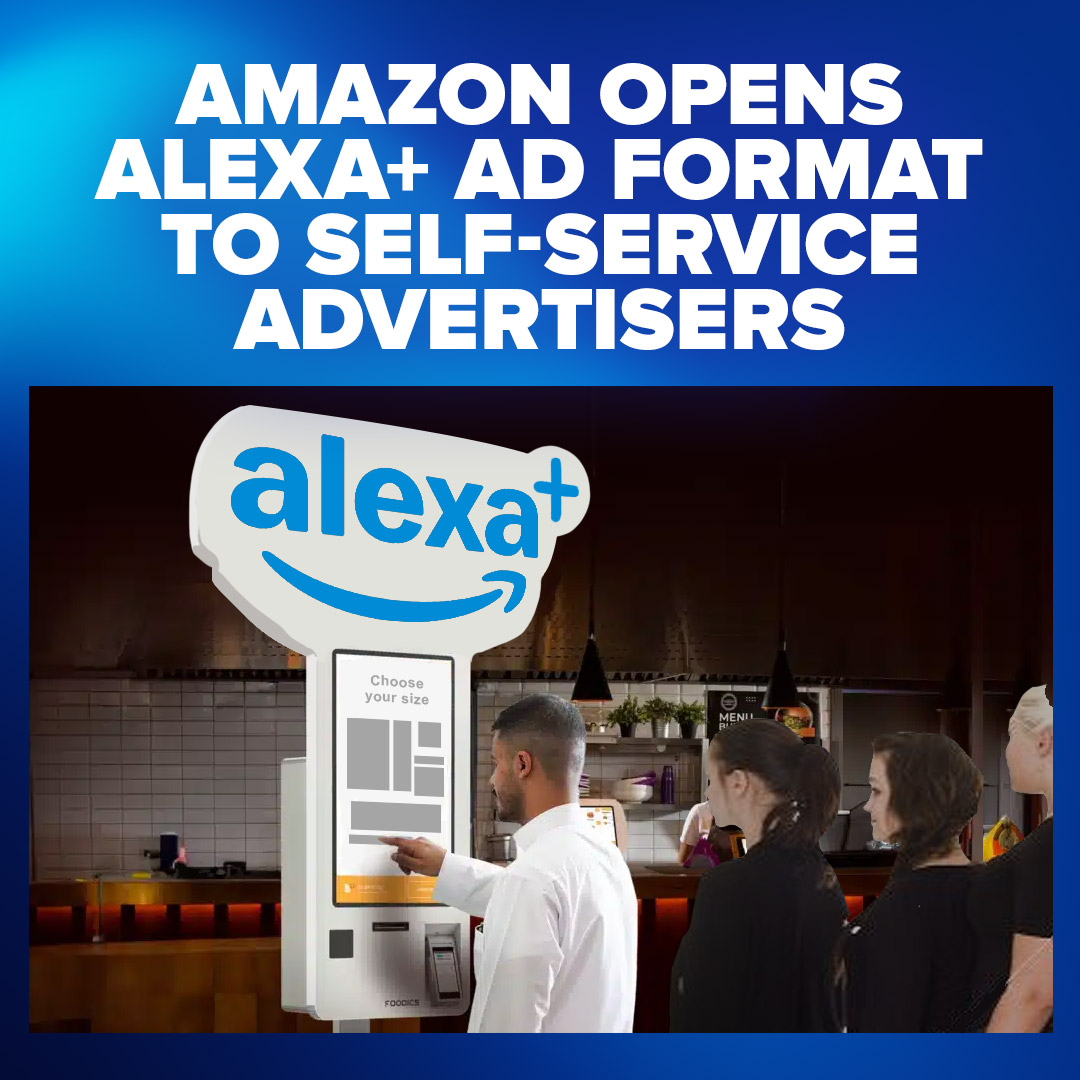

Amazon has officially expanded its Conversational Entertainment Ads format on Alexa+ to self-service advertisers in the United States, giving them the ability to manage these campaigns directly through the Amazon DSP interface. Previously restricted to a managed-service model requiring direct coordination with Amazon’s account teams, the format is now open to any self-service buyers already running Sponsored Tiles campaigns on Fire TV or Prime Video. When advertisers build new Sponsored Tile line items, Amazon automatically includes Alexa as a fallback inventory source, removing the operational friction of setting up a separate campaign or developing unique creative assets for the voice assistant.

The ad format itself is purpose-built for media and entertainment brands looking to capture users during high-intent discovery moments. When a user asks an eligible Echo Show device running Alexa+ for viewing recommendations, a sponsored visual tile appears alongside the AI’s natural language response. Audiences can interact with these tiles using both voice and touch commands to instantly rent or buy individual titles, or subscribe to Prime Video Channels without leaving the device. By reusing assets from Fire TV and Prime Video campaigns, Amazon allows advertisers to target premium, screen-equipped smart displays inside the home while keeping production costs low.

Spotify has embarked on an overhaul of its advertising business, utilizing automation and artificial intelligence to evolve beyond its traditional identity as a purely audio-focused media buy. The transition follows remarks from CEO Daniel Ek indicating that the streamer’s ad business was moving too slowly. To address this, Spotify has introduced the Spotify Ad Exchange to modernize automated media buying and launched generative AI tools designed to streamline the creation of ad scripts and voiceovers. Speaking on the Digiday Podcast, Brian Berner, Spotify’s VP of Advertising Partnerships, highlighted that the company’s roadmap aims to establish the platform as a permanent, permanent line item for marketers rather than a premium brand-awareness alternative. By standardizing its programmatic “plumbing,” Spotify wants to make it easier for brands to seamlessly access its consumer signals and formats. At the same time, the company is leaning heavily into performance marketing by prioritizing first-party measurement tools, specifically the Spotify pixel, to provide advertisers with a clearer understanding of post-exposure conversions. While Spotify is expanding its horizons into high-impact sponsorships, video formats, and live experiences to drive overall business growth, executives emphasize that these additions are entirely additive. The company maintains that its visual and automated expansions will not come at the expense of its core audio offering, which continues to sit comfortably at the top of a rapidly growing digital audio market.