


News Roundup - July 2026

Liquid Advertising

Catch up on this month's biggest stories in gaming and marketing!

The Trade Desk has integrated Netflix’s ad-supported inventory into its curated “Sellers and Publishers 500+” marketplace, accessible via its Kokai platform. This update removes the previous requirements for private marketplace negotiations or programmatic guaranteed deals, effectively eliminating budget minimums and specialized integrations for advertisers. By making this transition, Netflix opens up its ad inventory—which reaches over 250 million global monthly active users—to small and mid-sized buyers who want to purchase space using standard programmatic workflows.

This decision supports Netflix’s broader strategy to automate its transaction workflows and transition more than half of its non-live advertising business into programmatic channels, aiding its goal of hitting roughly $3 billion in ad revenue for 2026. For The Trade Desk, adding premium Netflix inventory helps reinforce its position against competing ad networks like Amazon DSP, which has actively undercut its fees. While traditional private deals remain available for advertisers desiring tighter control, this new channel streamlines access to premium connected TV inventory, although specific pricing details and inventory limitations for this format were not disclosed in the announcement.

Roblox has announced a new mobile-first tab called “Build” that leverages agentic AI tools to let creators generate games using text prompts. Similar to Meta’s “Pocket” app, users can input a descriptive sentence to automatically generate a playable 3D starting point, which they can then test, share, or further refine using Roblox’s “Studio” tab. The feature is designed to automate tedious development tasks and lower the barrier to entry for creators across all skill levels, tapping into the platform’s library of over 44 million mobile-friendly experiences. Testing for the “Build” feature begins on July 28 in New Zealand before expanding to other regions, alongside Roblox’s plans to release an additional scene-generation AI model that converts text prompts into fully editable 3D environments.

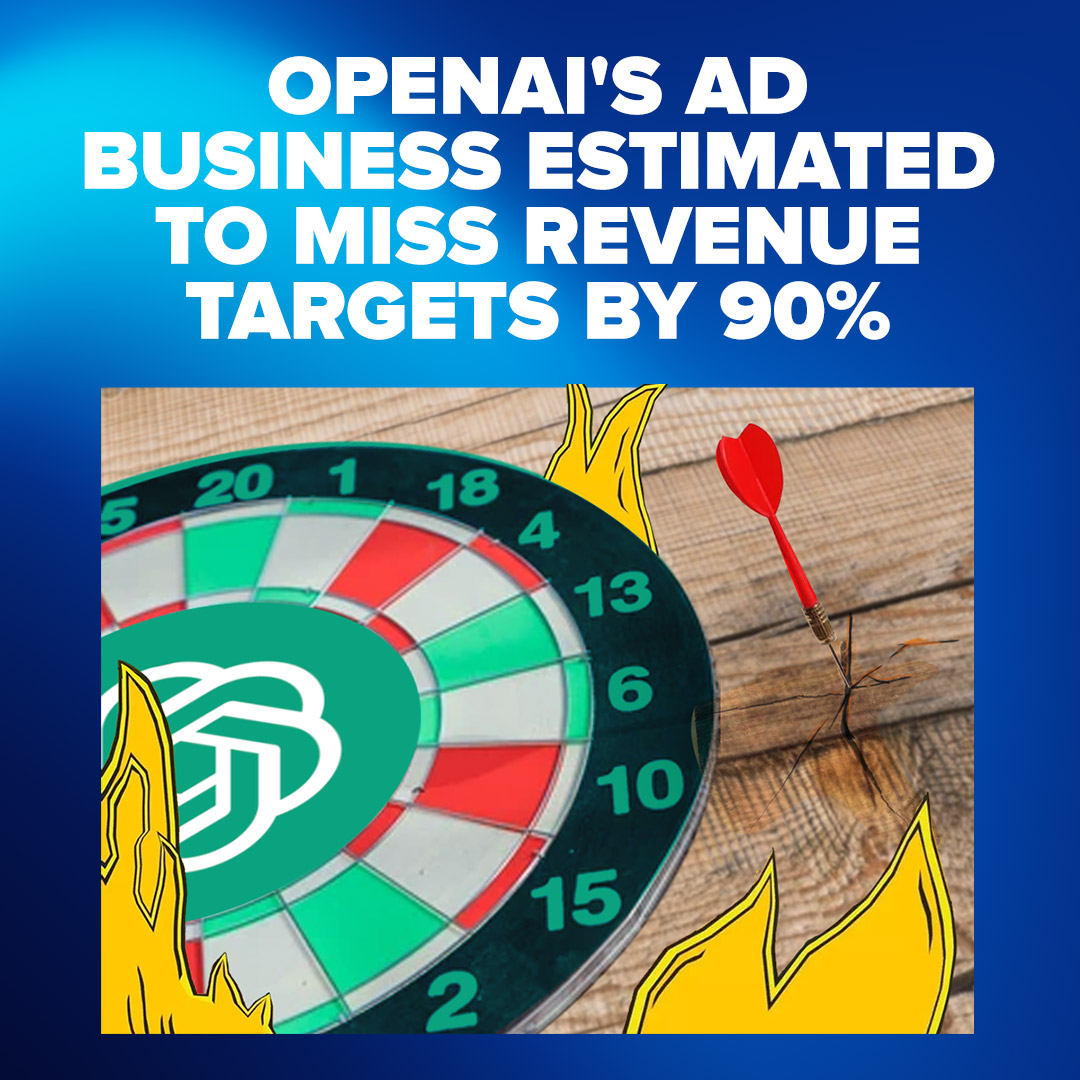
An analysis by Emarketer indicates that OpenAI’s advertising business is on pace to miss its long-term revenue targets by roughly 90%. While OpenAI has projected generating $2.5 billion in ad revenue this year and scaling to $100 billion annually by 2030, Emarketer forecasts a far tighter landscape. The research firm estimates that the entire U.S. standalone chatbot ad market—including ChatGPT, Microsoft Copilot, Google AI Mode, and Amazon Alexa for Shopping combined—will total less than $1 billion this year and reach just $5.41 billion by 2030.

This vast discrepancy highlights the steep uphill battle OpenAI faces after launching its ad product trial in February. For OpenAI to hit its multi-billion-dollar targets, analysts note that the company would simultaneously have to aggressively siphon search budgets from tech giants like Google and Meta, completely dominate the conversational AI market, and outpace the historical growth rate of every other digital ad format. Since advertising is expected to comprise a major chunk of OpenAI’s projected revenue to offset immense infrastructure costs, missing these numbers may quietly force the company to rely much more heavily on its subscription, API, and enterprise divisions to satisfy investors.