


News Roundup - April 2026

Liquid Advertising

Catch up on this month's biggest stories in gaming and marketing!

The 2026 FIFA World Cup is driving a significant surge in demand for digital out-of-home advertising as brands look for high-impact ways to reach massive crowds. Major marketers like Hyundai are integrating digital billboards at stadiums, airports, and fan zones into their broader media plans to capitalize on the heavy foot traffic and tourism expected in host cities. This shift is being fueled by a technological “renaissance” in the industry, where improved data and high-quality displays allow for more relevant and geographically targeted messaging than ever before.

For many advertisers, DOOH serves as a more accessible and affordable alternative to the skyrocketing costs of linear and streaming television. While official FIFA partners have the budgets for massive broadcast deals, smaller brands are turning to digital screens to establish a presence in host cities’ “wallpaper.” Industry experts note that inventory near key locations like Los Angeles’s SoFi Stadium is already almost entirely booked, with some providers reporting that they are pacing well ahead of a typical year.

The tournament is acting as a major revenue driver for the sector, with spending on U.S. out-of-home advertising projected to reach billions of dollars this year. Beyond the immediate financial gain, industry leaders view the World Cup as a critical proving ground for the effectiveness of DOOH compared to social media, which some studies suggest is less effective when consumers are on the move. Ultimately, the success of this tournament is expected to set the stage for even larger investments in the 2028 Summer Olympics.
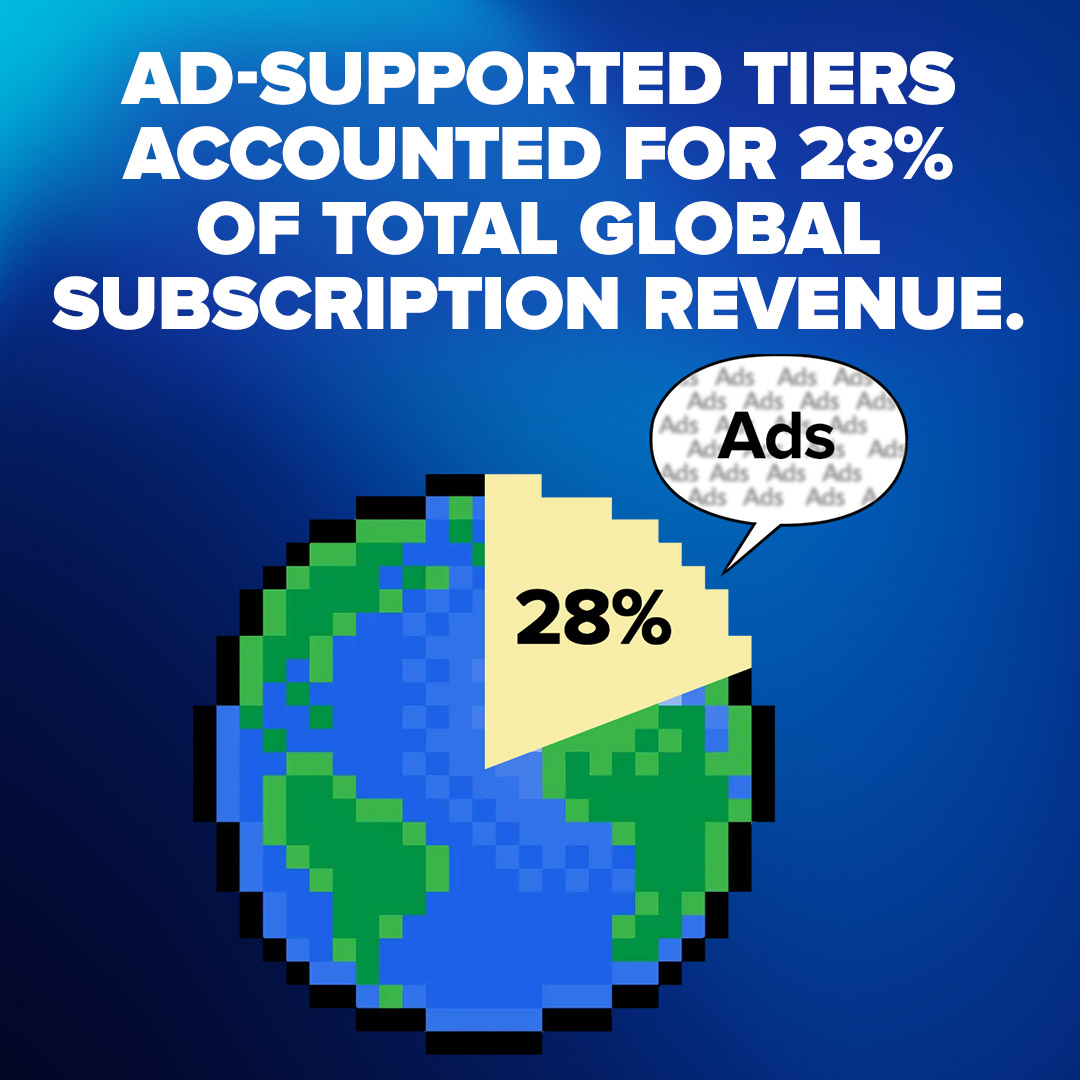

Global streaming subscription revenue reached a record high of $157 billion in 2025, up 14% from the previous year. A major driver of this growth was the rapid adoption of ad-supported tiers, which now account for 28% of total global subscription revenue. This is a massive leap from 2020, when ad tiers contributed less than 5% of the total, illustrating how critical hybrid models have become as the market matures and platforms shift focus from pure subscriber acquisition to maximizing value from existing audiences.

Including direct advertising revenue, the industry generated roughly $177 billion in 2025. The United States continues to lead the market, contributing 50% of the world’s total streaming revenue, with Netflix remaining the dominant player despite multiple price increases. Industry analysts project that total subscription revenue will exceed $200 billion by 2030, supported by continued price optimization and an even larger contribution from advertising, which is expected to reach $42 billion annually by the end of the decade.

This evolution highlights a broader trend where consumers are increasingly willing to trade ad-free viewing for lower costs. Major services like Disney+, Netflix, and Max have all seen significant jumps in their ad-supported user bases as they prioritize profitability. As the landscape becomes more crowded, these ad-supported options are providing platforms with a dual revenue stream that balances consumer affordability with long-term financial growth.

Meta is simplifying the implementation of its Conversions API (CAPI) to help advertisers maintain data accuracy amidst increasing privacy regulations and the decline of traditional browser cookies. This “easy button” approach is designed to remove the technical hurdles that previously required developers and manual server setups, making server-to-server tracking accessible even to small and medium-sized businesses. By streamlining this connection, Meta aims to ensure its advertising algorithms receive a steady flow of high-quality data, which is essential for the performance of automated tools like Advantage+.

The shift toward CAPI is becoming a necessity as U.S. privacy laws become more fragmented and browser-based pixels face stricter limitations. Relying solely on pixels is increasingly viewed as a risk to both campaign performance and legal compliance. By providing a plug-and-play solution that routes first-party data directly from back-end platforms like Shopify or WooCommerce, Meta is helping brands bypass signal loss and stabilize their return on ad spend.

Ultimately, this update is a strategic move to protect Meta’s advertising ecosystem from “algorithmic starvation.” As tracking via traditional methods degrades, the ease of adopting CAPI will determine how effectively brands can continue to target and measure their campaigns. This automation marks a transition where advanced server-side tracking moves from a luxury for large enterprises to a standard requirement for all advertisers on the platform.